
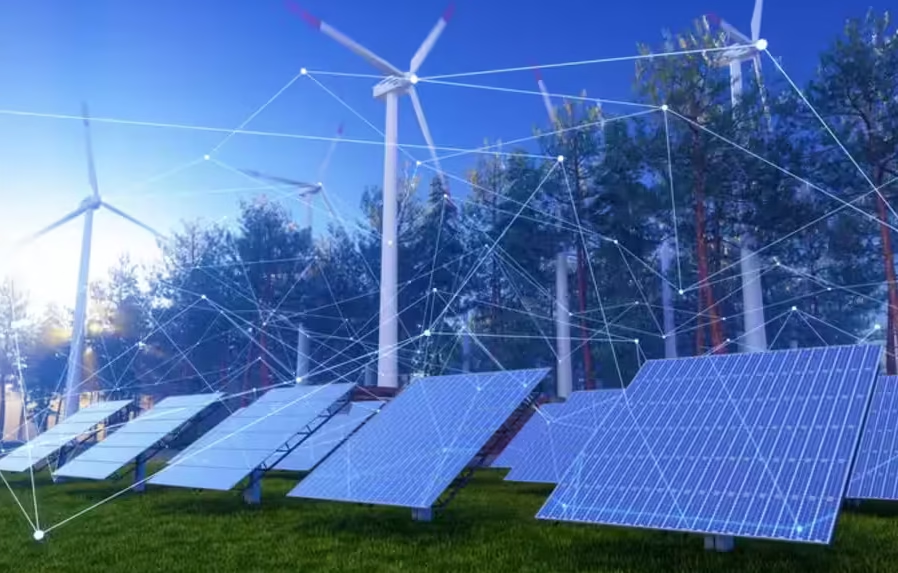
Vermont’s Virtual Power Plant or Virtual Power Plant. As electricity demand rises, traditional power grids face a growing challenge: delivering enough electricity exactly when people need it most. At the same time, more households and businesses are installing batteries, solar panels, electric vehicles, and smart energy systems.
So, what if all those distributed energy resources could work together like one large power station?
That is essentially the idea behind a virtual power plant (VPP).
Virtual Power Plant?
A virtual power plant is a network of connected energy resources that can be coordinated through software to generate, store, or reduce electricity when the grid needs support.
Unlike a conventional power station, a VPP does not depend on one physical facility. Instead, it combines resources located in different homes, businesses, and other locations. These resources might include home batteries, solar systems, commercial energy storage, electric vehicle chargers, and controllable electricity loads.
Smart software monitors these resources and coordinates them according to grid conditions.
As a result, thousands of smaller energy systems can operate together and provide services that would traditionally come from a large centralized power plant.
How Does a Virtual Power Plant Work?
So, how does a virtual power plant work in practice?
The process begins when participating energy devices connect to a central management platform. The platform can receive information about electricity demand, available stored energy, energy prices, and grid conditions.
When electricity demand increases, the system can respond by coordinating participating resources.
For example, a home battery may discharge some of its stored electricity instead of drawing power from the grid. At another location, a smart EV charger might temporarily reduce charging. Meanwhile, a commercial battery could send electricity back to the grid.
Why Are Virtual Power Plants Important?
Electricity demand does not remain constant throughout the day. It can rise sharply during extreme temperatures, when households and businesses increase heating or cooling.
Traditionally, utilities may need to bring additional generation online or purchase more electricity from wholesale markets during these periods.
Virtual power plants offer another option.
Instead of relying entirely on additional centralized generation, utilities can use energy that has already been stored in participating batteries or adjust flexible electricity consumption.
This approach can help:
- Reduce pressure on the electricity grid.
- Provide additional capacity during periods of high demand.
- Make better use of distributed energy resources.
- Reduce reliance on expensive peak-period electricity.
- Support greater integration of renewable energy.
- Give participating customers additional ways to manage their energy use.
A Power Plant in Vermont Shows How the Model Can Scale
The concept becomes easier to understand when looking at a real-world power plant in Vermont, although the resource is not a conventional power station.
Vermont has become an important example of how a Vermont virtual power plant can coordinate distributed batteries and other energy resources.
Green Mountain Power has developed a program that connects customer-sited batteries with a broader network of energy resources. Rather than treating each battery as an isolated device, the utility can coordinate participating systems when grid conditions require additional flexibility.
This approach demonstrates an important point: a virtual power plant does not need to look like a traditional power plant.
What Makes a Vermont Virtual Power Plant Different?
A Vermont virtual power plant illustrates how residential energy storage can become part of the wider electricity system.
Homeowners who install qualifying batteries can potentially use those batteries for their own energy needs while also participating in a utility-managed program.
When the grid requires additional support, the utility can coordinate participating batteries according to program rules.
This creates a two-way relationship.
Customers gain access to energy storage that can provide household benefits, while the utility gains access to a distributed source of flexibility.
Virtual Power Plant Examples
There are many virtual power plant examples around the world, and they do not all use the same combination of technologies.
A larger program might coordinate several types of distributed energy resources at the same time.
Here are a few common VPP models:
1. Residential Battery VPPs
These programs connect batteries installed in individual homes.
When many batteries participate simultaneously, they can provide substantial combined capacity. The batteries can charge when electricity is more readily available and discharge when the grid needs additional power.
2. Solar and Battery VPPs
Solar panels produce electricity during daylight hours, while batteries can store some of that energy for later use.
A VPP can coordinate these systems so that stored solar energy becomes available when demand increases.
3. EV Charging VPPs
Electric vehicles represent another potentially valuable source of flexibility.
Instead of charging every vehicle at the same time, smart charging systems can shift charging toward periods when electricity demand is lower.
More advanced systems may also allow compatible EV batteries to supply electricity back to the grid.
4. Commercial and Industrial VPPs
Businesses often operate large batteries, HVAC systems, refrigeration equipment, and other flexible loads.
A VPP platform can coordinate these resources to help manage demand without necessarily requiring new centralized generation.
Who Are the Major Virtual Power Plant Companies?
The growing VPP market has attracted utilities, energy technology providers, battery manufacturers, and software companies.
Different virtual power plant companies focus on different parts of the market. Some provide the software needed to aggregate distributed energy resources, while others specialize in batteries, demand response, or energy management.
The market also includes utility-led programs in which the utility directly coordinates customer-owned or leased energy resources.
How Virtual Power Plants Can Support Renewable Energy
Renewable energy sources such as solar and wind can vary depending on weather and time of day.
That variability creates a need for flexible resources that can respond when generation and demand do not line up.
Battery storage can help address this challenge.
For example, a VPP can coordinate batteries to store electricity when renewable generation is plentiful. Later, when demand rises or renewable production falls, those batteries can provide some of the stored energy.
As a result, virtual power plants can complement renewable generation rather than simply replacing conventional power plants.
What Are the Benefits for Consumers?
For customers, participation in a VPP can provide more than a way to support the grid.
Depending on the program, participants may receive financial incentives for allowing their energy resources to be managed during certain periods.
Battery owners may also use their storage for backup power, energy management, or other household purposes.
However, the exact benefits depend on the utility, technology, contract, and local electricity market.
Consumers should therefore review program requirements carefully before enrolling.
Are Virtual Power Plants Replacing Traditional Power Plants?
Not necessarily.
Virtual power plants are better understood as an additional layer of flexibility within the electricity system.
Traditional generators can still provide large amounts of continuous electricity. Meanwhile, VPPs can use distributed resources to respond quickly to changing demand and grid conditions.
In many cases, the two approaches can work alongside one another.
The larger opportunity comes from combining centralized generation with distributed resources, energy storage, renewable generation, smart controls, and flexible demand.
What’s the Future?
The potential of VPPs is likely to grow as more households and businesses adopt batteries, solar panels, EVs, and smart energy technologies.
Each new connected device can become part of a larger network of flexible energy resources.
The key challenge will be coordination.
Utilities and VPP operators need reliable software, secure communications, clear customer agreements, and effective incentives. They also need to ensure that customers understand when and how their energy resources may be controlled.
If those pieces come together, virtual power plants could become an increasingly important part of modern electricity systems.
So, what is a virtual power plant?
It is a digitally coordinated network of distributed energy resources that can work together as a flexible electricity resource.
Instead of relying on one massive facility, a VPP brings together batteries, solar systems, EV chargers, commercial equipment, and other controllable resources.
The growing interest in Vermont virtual power plant programs shows how this concept can move beyond theory and become part of real-world grid management.
Ultimately, virtual power plants represent a shift in how electricity systems can operate: rather than treating homes, vehicles, batteries, and businesses only as electricity consumers, the grid can increasingly coordinate them as active energy resources.
Written by: Suresh K
Reviewed by: Nokari.Editorial Team
Published: 2 October 2026
Last Updated: 2 October 2026
Verification: Vacancy details, eligibility, important dates and application information were checked against the official recruitment notification.
About the Author




2 thoughts on “Vermont’s Virtual Power Plant: How It Is Transforming Energy”
Comments are closed.